Part Two of a series on alignment, ease, and building from the inside out.

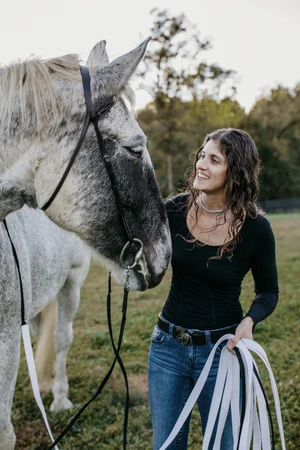
Photo by Marko Blažević on Unsplash
Last week’s post was about how alignment produces ease and how that ease can feel deceptively hard to access at first, because you're building new capacity in underused muscles.
But there's something I didn't say. Something that came through clearly the next morning, sitting with the question a little longer.
Alignment isn't possible until there's safety.
That's the missing piece. That's why it works the way it does.
What Tension Is Actually Telling You
In the first post, I talked about tension as a warning bell; a signal that alignment has slipped. And that's true. But there's a deeper question worth asking:
Why is the tension there in the first place?
The patterns of resistance, bracing, guarding — the compensation patterns that make alignment so hard to sustain — they're not errors. They're not failures of willpower or proof that you're broken. They're a nervous system doing exactly what nervous systems are designed to do: keep you safe in the absence of actual safety.
Every animal knows this. Watch a horse that's been handled roughly, or hauled in a trailer that turned into a frightening experience. The next time you bring the trailer out, no amount of grain is going to override what the nervous system remembers. That horse isn't being difficult. That horse is being smart. The body kept the score and it's making a very reasonable decision based on available data.
Our nervous systems work the same way.
The tension, the resistance, the freeze response, the going-blank-right-when-you-need-to-think — none of it is random. It's patterned. And the pattern always points back to the same root question: Is it safe here?
Why "Just Relax" Doesn't Work
If tension exists because safety is missing, then trying to force relaxation, without addressing the underlying safety, is like trying to build a house on a foundation that's still actively shifting.
It's not that the effort is wrong. It's that it's aimed at the wrong layer.
This is why breathwork and positive thinking and "just decide to feel better" can feel frustratingly temporary. Not because those tools don't have value, but because a nervous system that doesn't feel safe will recruit whatever resources it has to maintain its vigilance — even when the conscious mind is trying to override it.
Real change starts at the easiest, most accessible point of entry. Not the hardest. Not the most dramatic. The most available.
For some people that's the body: bodywork, somatic movement, breathwork, gentle physical contact. For some it's the energy system. For some it's the emotional layer, or the relational layer, or simply having one conversation that finally tells the nervous system: the threat has passed. You can put it down now.
It doesn't matter which door you walk through first. What matters is that you start somewhere, and that you keep asking the question: what builds safety here?
The Whole-System Truth
Here's what I find endlessly fascinating, working at the intersection of bodies and energy: you can't actually separate the systems.
Bodywork shifts emotions. Energy work releases physical holding. Emotional safety changes postural patterns. Relational safety shifts what the nervous system will allow the body to do. It's all one system wearing different faces.
This is why alignment is always a whole-system project.
When you make progress in one area, even a small amount, even just one conversation that went better than expected, or one morning where you woke up and the body felt less braced — that progress ripples. The entire system gets better as any one part gets better, because they were never actually separate to begin with.
This is deeply hopeful, if you let it be.
It means you don't have to overhaul everything at once. You don't have to fix the body and heal the nervous system and do the emotional work and clear the energy and rewrite the story all simultaneously, from scratch, at full intensity.
You just have to find the easiest entry point available to you right now, and begin there.
What I See in Animals
Animals are remarkable teachers on this because they don't philosophize about safety. They simply demonstrate it or they don't.
A dog whose nervous system feels safe can learn, play, connect, rest, tolerate novelty. A dog whose nervous system doesn't feel safe will use every resource available to manage that, sometimes visibly (barking, lunging, hiding), sometimes very quietly (shutting down, going flat, becoming very still in a way that looks like calm but isn't).
The behavioral picture changes completely once safety is established. Not because we trained the behavior — but because a system that feels safe doesn't need those strategies anymore.
I've seen this in horses too, over many years of working with them. The horse that looks difficult, resistant, shut-down, reactive often isn't any of those things at the core. They're a nervous system that hasn't yet received sufficient evidence that it's safe to be otherwise.
When that evidence accumulates? The horse you thought you knew shows up differently. Not because you broke them down, but because you built safety up.
The same is true of us.
Starting Where You Are
If you're working on your own alignment — physical, energetic, emotional — and you keep hitting walls, I'd invite you to shift the question from why can't I stay aligned to what does my system need to feel safe enough to allow this?
And if you're not sure where to start: start at the easiest place. Whatever feels the least charged, the least threatening, the most available. Even if it seems too small to matter.
Small accumulates, safety builds. And a system that feels safe has access to resources that a braced, vigilant system doesn't — including, eventually, the ease that alignment makes possible.
You're not starting over every time. You're building a record. A body of evidence that tells your nervous system: it's okay. You can put it down now. We've got this.
What's your easiest entry point? The place where it feels most natural to start building safety — in your body, your energy, your emotional life? I'd love to hear what's working for you.